
The Arab Forum on Nuclear Medicine in Oncology: Illuminating the Future of Cancer Diagnosis and Therapy
:The forum is organized by the Arab Atomic Energy Agency in cooperation with
The Tunisian Ministry of Health
The Tunisian Ministry of Higher Education and Scientific Research
National Center of Nuclear Sciences and Technologies (CNSTN)
The International Atomic Energy Agency
Hammamat, Tunisia – November 24-27, 2026
Background
Cancer remains one of the most pressing public health concerns across the Arab region. Based on the most recent statistics from the World Health Organization (WHO) and the International Agency for Research on Cancer (IARC), over 750,000 new cancer cases are recorded each year in Arab countries. This number is expected to surge beyond 1.8 million cases by the year 2040, representing an increase of more than 140% in certain countries. (Recent GLOBOCAN projections further confirm a strong upward trend across the wider Arab and MENA regions, largely driven by population growth, aging populations, lifestyle transitions, and improved diagnostic capabilities in some areas, while underreporting persists in others.)
Effective cancer management relies fundamentally on three interdependent pillars: early and precise diagnosis, advanced radiation therapy, and nuclear medicine—particularly theranostic approaches that integrate diagnostic imaging with highly targeted therapeutic interventions. International evidence shows that approximately 50–60% of cancer patients require radiation therapy at some point during their treatment course.
Despite this, many Arab countries continue to face significant gaps in both infrastructure and specialized human resources. The number of linear accelerators—essential equipment for modern external beam radiation therapy—per million inhabitants remains substantially below levels recommended by the IAEA. Additionally, there is a critical shortage of trained medical physicists and specialized clinicians, alongside a concentration of services in capital cities and major urban areas. (For reference, international benchmarks often suggest approximately 4–8 linear accelerators per million population in developed healthcare systems; many countries in the Arab region fall far below this threshold, contributing to long waiting lists and limited access to advanced treatment modalities.)
Against this backdrop, the proposed regional seminar comes at a strategically important and timely juncture. It represents not only a platform to highlight cutting-edge global technologies but also an opportunity to establish practical pathways for addressing these gaps and strengthening national capacities to deliver high-quality, sustainable cancer care across the Arab world.
Objectives
.Present and assess the latest scientific and technological developments in radiation-based diagnosis, precision radiation therapy, and nuclear medicine, with particular emphasis on theranostics
.Enhance practical skills among physicians and medical physicists through structured, hands-on training workshops
.Facilitate dialogue on regional challenges while enabling the exchange of successful experiences and best practices among Arab countries
.Reinforce both regional and international collaboration and foster sustainable partnerships between Arab healthcare institutions, the IAEA, and the private sector
.Develop clear, actionable recommendations to support the advancement of nuclear medicine and radiation therapy services throughout the region
.Produce a consensus-based policy document with defined implementation priorities and timelines
.Position the Arab region as an emerging global contributor in precision oncology and theranostics, bridging innovation, access, and capacity-building in low- and middle-income settings
Fields, Issues and Key Themes of the Forum
Advanced Imaging in Radiation and Nuclear Medicine -
State-of-the-art PET/CT and SPECT/CT technologies (Positron Emission Tomography/Computed Tomography and Single Photon Emission Computed Tomography/Computed Tomography), recognized as gold standards for functional and molecular imaging.
The application of artificial intelligence to enhance image quality while minimizing radiation exposure.
The role of molecular imaging in predicting treatment response.
From Imaging to Impact: Nuclear Medicine in the Cancer Care Continuum
Precision and Adaptive Radiation Therapy -
Adaptive radiotherapy using advanced linear accelerators capable of real-time treatment modification based on anatomical changes.
Stereotactic Body Radiation Therapy (SBRT) / Stereotactic Ablative Radiotherapy (SABR), delivering high-dose, highly focused treatments in a limited number of sessions for small tumors.
Proton therapy using Pencil Beam Scanning, enabling highly precise dose delivery while sparing surrounding healthy tissues.
MR-Linac systems, combining magnetic resonance imaging with linear accelerators to allow real-time visualization and treatment adaptation.
Nuclear Medicine and Targeted Radiopharmaceutical Therapies (Theranostics) -
Lutetium-177 PSMA for prostate cancer treatment.
Lutetium-177 DOTATATE for neuroendocrine tumors.
Emerging advances in alpha-emitting radiopharmaceuticals such as Actinium-225 and Thorium-227, which deliver high-energy, short-range radiation with promising results in advanced metastatic cancers.
Theranostics: From Innovation to Access in LMICs
Personalized dosimetry and response-adapted theranostic strategies to optimize therapeutic index and clinical outcomes.
Radiation Protection and Safety -
Implementation of the ALARA principle (As Low As Reasonably Achievable) to minimize radiation exposure.
Monitoring occupational radiation doses.
Safe management and disposal of radioactive waste.
Artificial Intelligence and Digital Transformation -
Automated radiation treatment planning systems.
AI-driven segmentation tools for tumor and organ delineation.
Predictive modeling of treatment outcomes using deep learning techniques.
End-to-end AI integration in Nuclear Medicine: from acquisition to clinical decision support.
AI-Powered Theranostics: From Segmentation to Digital Twins and Personalized Dosimetry.
Regional Challenges and Capacity Development -
Case studies from Arab countries in establishing and expanding nuclear medicine and radiation therapy services.
Public–private partnership frameworks.
Strategies to ensure sustainable production and supply of medical radioisotopes.
Scaling Nuclear Medicine through Partnerships
Multidisciplinary Cancer Treatment Approaches -
Integration of radiation therapy with immunotherapy and chemotherapy to enhance therapeutic outcomes.
Clinical Case Arena: How Imaging Changed the Outcome
Expected Outcomes -
The seminar is anticipated to achieve the following:
Establishment of an Arab collaborative network focused on theranostics.
Publication of a regional recommendations report to be submitted to the Arab Ministers of Health Council.
Strengthened partnerships between Arab institutions and leading international companies.
Initiation of continuous training programs and collaborative research initiatives.
Overall, this event has the potential to significantly advance cancer care in the Arab region by closing knowledge gaps, promoting collaboration, and accelerating the adoption of cutting-edge precision technologies in radiation oncology and nuclear medicine. It addresses both immediate clinical priorities and long-term strategic capacity-building in a region experiencing a rapidly growing cancer burden.
Participation
: The Forum will bring together
Representatives of Arab and international bodies, organizations, and institutions operating in the fields of diagnostic imaging, radiation therapy, and nuclear medicine.
Arab and international decision-makers in the fields of establishing oncology and nuclear medicine centers and strengthening national infrastructure, to share their experiences and discuss highly critical priorities for Arab countries.
Ministries, authorities, and institutions concerned with healthcare, cancer care, and nuclear medicine in Arab countries.
International and local medical medical imaging, nuclear medicine, radiotherapy, and related industries to showcase their products on the sidelines of the forum.
Anyone who wishes to participate in the activities of this forum can register through this link
Register
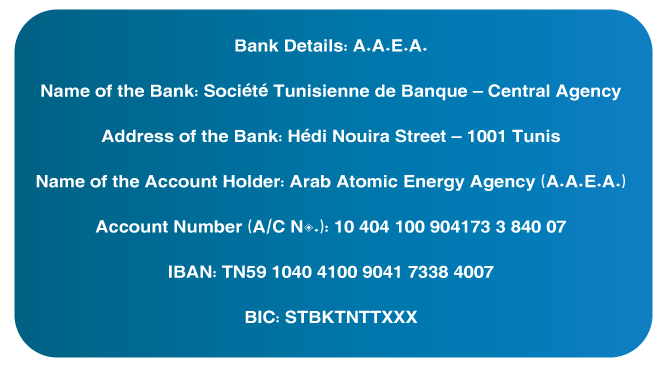
The registration fee for foreign participants is $1,000 USD. Please transfer the registration, exhibition, and sponsorship fees through the official bank account of the Arab Atomic Energy Agency (AAEA)as follows
: Place and Date
Hammamat, Tunisia – November 24-27, 2026
:Languages Adopted at the Forum
Arabic and English are the two approved languages.
:Forum Program
The initial program will be sent to all participants and will be posted on the forum website
:Accommodation
Detailed information regarding accommodation arrangements and other administrative logistics will be made available on the official website of the Arab Atomic Energy Agency in due course.
: For accommodation and logistical arrangements in Tunisia, please contact
Mohamed Omari
Email:Omarimohad@gmail.com
Phone / WhatsApp: +216 51 867 773
Ghaith Sahli
Arab Atomic Energy Agency (AAEA)
Phone / WhatsApp: +216 26 204 549
Email: sehlighaith@gmail.com
:Forum Email
MedicalForum_2026@yahoo.com
:Sponsorship
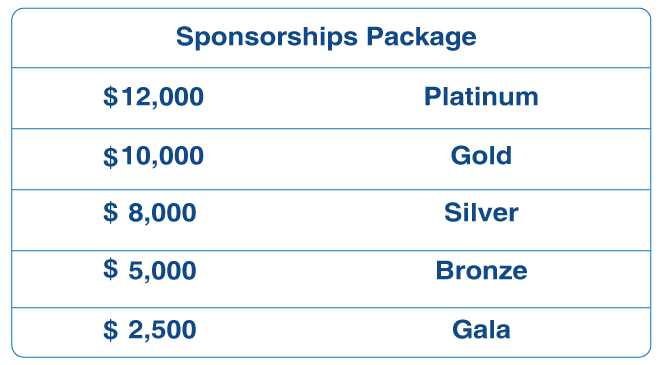
Sponsors will be categorized into platinum, gold, silver, bronze and Gala. This will be arranged with the parties concerned, as per their request and priority according to the submitted applications:
:Visas
Participants requiring entry visas to the Republic of Tunisia should contact the following email address: MedicalForum_2026@yahoo.com for further information and instructions
:Deadline for Registration
